
Budgeting and saving: easy habits that actually help you keep control of your finances. The term “budgeting” conjures up images of rigid rules, tedious spreadsheets, and refusing to participate in fun activities. That is not a budget. That is retribution. Budgeting in practice is different. It’s quieter now. more adaptable. And, to be honest, a lot more useful. Budgeting and saving are not about removing joy from life. They aim to alleviate stress. about not having to worry about your money disappearing again and knowing where it goes. The issue is this: The majority of people don’t have a hard time saving because they make too little. They struggle due to their lack of tracking. Or they track for two weeks and then stop. Things get busy. We forget. It occurs to everyone. Begin small. Seriously.
You don’t need a flawless strategy. You need a place to start. Understanding your fixed expenses and monthly income is the first step. Rent. EMIs. Bills. subscriptions you didn’t even know you had. Even just that can be eye-opening. By getting rid of things they no longer use, many people save money. Examine what remains once that is apparent. That number is important. You actually have control over that amount of money. Budgeting is not a constraint. It’s the way. Instead of asking where your money went, a good budget tells you where to put it. If you are new to this, try a simple rule. Divide a portion of your earnings. Some to meet needs. Some for desires. Some to save money. Consistency matters more than exact percentages. Discipline can be developed by regularly saving even a small amount. and self-assurance. Also, if you don’t like fancy apps, you don’t need them. an app for notes. a fundamental spreadsheet. even with paper and pen. The best system is whatever you’ll actually stick with. Saving is most effective when it is automated. A simple trick that works surprisingly well is presented here. Protect first. not the last. After you get paid, set up automatic transfers to your savings account. Think of savings as a debt you must pay yourself. You are less likely to use the money when it is not in your spending account. Even better, make accessing your savings a little more difficult. It is not impossible. Just inconvenient enough to make you think before you pull out. That pause is important. Emergency funds are required. This is the one thing that financial experts all agree on. Everything is affected by emergency funds. There will be costs that you didn’t expect. medical expenses. Repairs. Changes in work These occasions result in debt if there is no savings. They become temporary issues when savings are used. Begin with a modest objective. Costs for one month. Then, gradually expand it. There is no need to rush. You only need to begin. Budgeting ought to change, not break. Life doesn’t go as planned. There will be off-track months. Festivals. Travel. Needs of family That doesn’t mean your budget didn’t work out. It indicates your humanity. Adjust as necessary. Check back frequently. Learn from your mistakes. The objective is not perfection. It’s consciousness. And here’s something that is said infrequently. You are permitted to indulge in your wealth. Spending without guilt should be included in a budget. Fun that is planned doesn’t feel rash. Last Thought Budgeting and saving are more than just numbers. They are about routines. about how checking your balance makes you feel calmer. about being able to deal with unexpected events. You don’t have to make every change immediately. one small step at a time. Next, another. When you pay attention to money, its behavior improves. Things begin to feel a little bit more manageable once you do. A little lighter.
That is the real advantage.
Posted inMoney Habits
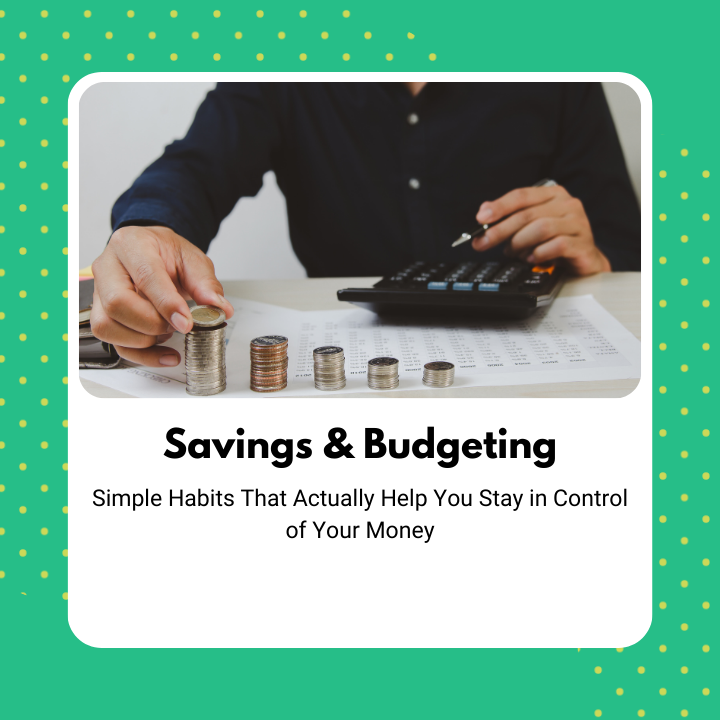
Savings & Budgeting
Posted by
 No Comments
No Comments
Post navigation
Previous Post
 Market Trends & Insights
Next Post
Credit Score Guide 